Rare Disease Drug Repurposing

A World Where No Disease
Is Too Rare.

Orphera's AI engine identifies new therapeutic uses for existing approved drugs — starting with rare diseases where 95% of patients have no treatment.

7,000+
Known rare diseases
95%
Have no approved treatment
300M
Patients worldwide
A child looking up with hope
The bottleneck isn't the algorithm. It's the economics.
Traditional drug development costs $2.6B and takes 15 years. For rare diseases with tiny patient populations, the ROI math never works. Drug repurposing changes the equation.
$2.6B
Average new drug development cost
15yr
Average development timeline
3–6yr
Repurposing timeline — using drugs with known safety profiles
$243B
Global orphan drug market (2026)
CREST Engine
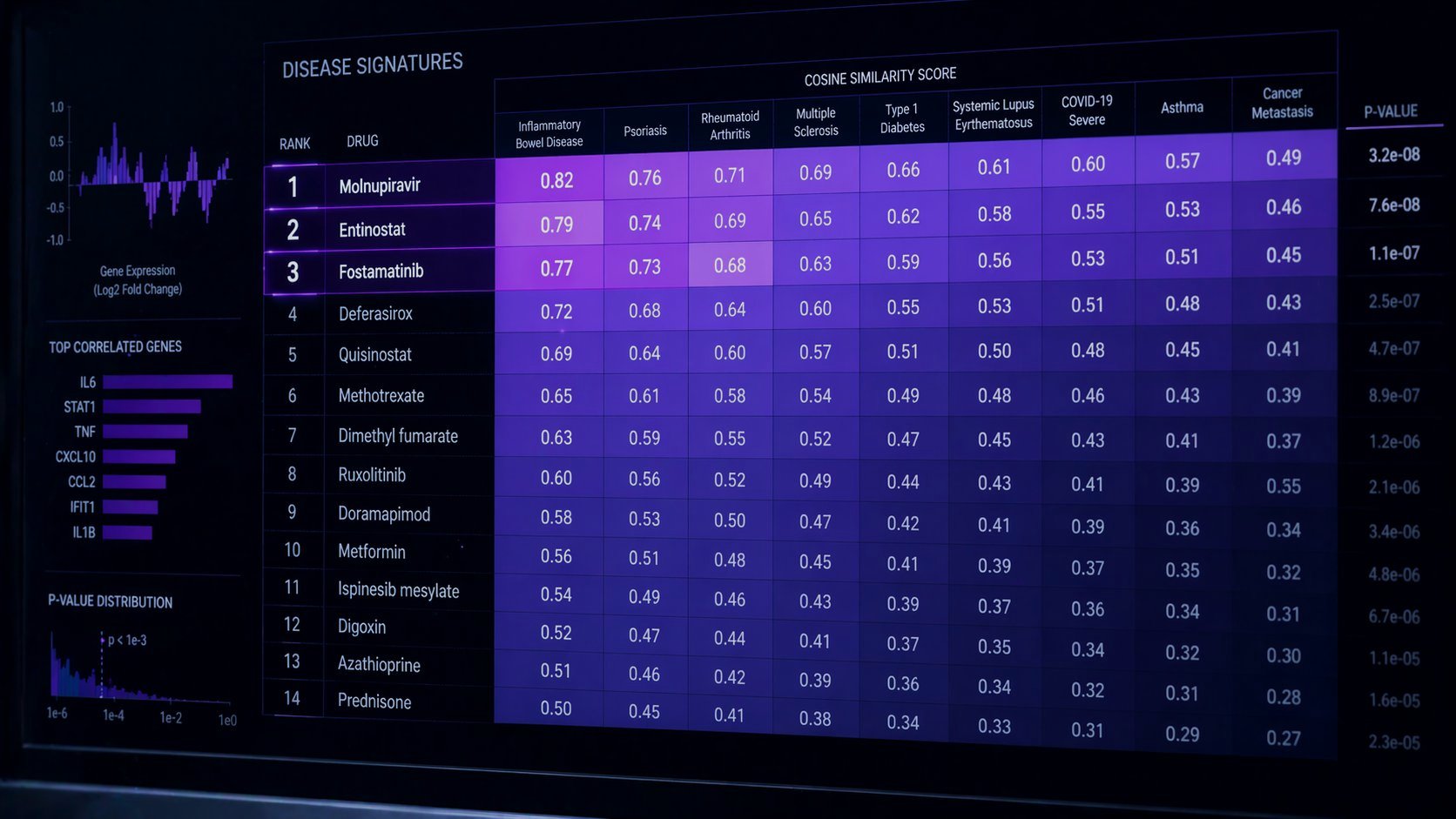
Cell-type Resolved Expression Screening for Therapeutics — our proprietary algorithm that matches disease gene expression patterns against 1,170 approved drug signatures.
1
Disease Signature
Calculate the gene expression change pattern from patient transcriptome data — which genes go up, which go down.
2
Drug Library Matching
Compare against 1,170 approved drug signatures from the LINCS library using cosine similarity.
3
Reversal Ranking
Rank drugs that reverse the disease pattern. Statistical validation via 10,000-iteration permutation test (p=0.001).
4
Candidate Delivery
Deliver ranked repurposing candidates with evidence packages — ready for regulatory and IP strategy.

Validated Results

Sirolimus × Progeria (HGPS)
Rank 4 / 1,170
Top 0.3% — blind recovery of a clinically confirmed drug. Permutation p = 0.001.
Pioglitazone × Werner Syndrome
Rank 1 / 1,170
Independent validation on a second rare disease with published efficacy evidence.
Cross-disease Validation
3 diseases verified
HGPS, Werner, DMD — pipeline self-diagnoses when conditions are not met (built-in quality gate).
One engine. Multiple revenue streams.
Beyond discovery contracts, the CREST engine powers a suite of intelligence tools for the rare disease drug repurposing ecosystem.
📡
Intelligence

RareDrugRadar

Competitive intelligence for rare disease drug repurposing. Track orphan designations, clinical trials, patents, and publications — automatically.

FDA Orphan Drug DB monitoring
ClinicalTrials.gov alerts
KIPRIS + Global patent tracking
Monthly competitive landscape report
🧭
Regulatory

OrphanRegPath

Regulatory pathway navigator for repurposed drugs. Input a drug–disease pair, get a structured route analysis with patent and clinical cross-checks.

505(b)(2) / ODD pathway simulation
Real-time patent barrier check
Prior clinical data availability
Decision memo auto-generation
📋
Evidence

Evidence Pack

Instant Go/No-go cards for drug–disease combinations. Literature, patents, clinical data, and competitive status — scored and standardized.

Standardized evidence cards
Go/No-go scoring (transparent logic)
Batch screening (10+ combos)
Comparison view across candidates
Built different from day one.
Every competitor feeds the same public databases into their models. Our approach is fundamentally different.

Cell-type Resolved Analysis

We match disease signatures at the cell-type level, not tissue-level bulk data. This produces 250× stronger signal — the key factor behind Sirolimus rank 4.

Built-in Quality Gate

Our pipeline self-diagnoses. If patient expression patterns are inconsistent (cosine < 0.8), the system automatically flags the disease as not suitable — preventing false predictions.

Rare Disease Specialized

Not a general-purpose AI drug discovery platform. Every design decision — from data curation to regulatory knowledge — is optimized for orphan drug economics.

Full Value Chain Coverage

Discovery (CREST) → Intelligence (RareDrugRadar) → Regulatory (OrphanRegPath) → Evidence (Evidence Pack). No competitor covers the full rare disease repurposing pipeline.

Every child deserves a chance.

We work with biotech companies, patient foundations, and investors who believe no rare disease should go untreated.

Get in Touch →
Accelerating hope for rare disease patients.
A child looking up with hope